8 Best Nail Guns for Fencing (October 2026)
The best nail guns for fencing include the Metabo HPT NR90AES1 21 Degree Framing Nailer for mixed fence projects, the Metabo HPT NR90ADS1 30 Degree Framing Nailer for narrow fence corners, and the NuMax SFR2190 21 Degree Framing Nailer for first fence builds.
On this page (7 sections)
- How we chose the best nail guns for fencing
- Which nail gun fits your fence project?
- What should you check before buying a fencing nailer?
- How should you set up a nail gun for fence work?
- What keeps a fencing nailer working between jobs?
- Which mistakes cause the most trouble on a fence?
- Which nail gun should you choose for fencing?
The best nail gun for fencing is the Metabo HPT NR90AES1 when its framing nails match your fence joints. It combines a relatively low weight with depth control for moving between boards, rails and other compatible framing work.
Choose the fasteners before the tool. Thin pickets, thick rails and decorative trim can need different fastening methods, even on the same fence.
For a broader overview of tool types and project choices, see our complete nail gun guide. If you'll also build sheds or other structures, our best framing nailers roundup covers those needs.
Our picks at a glance
-
1
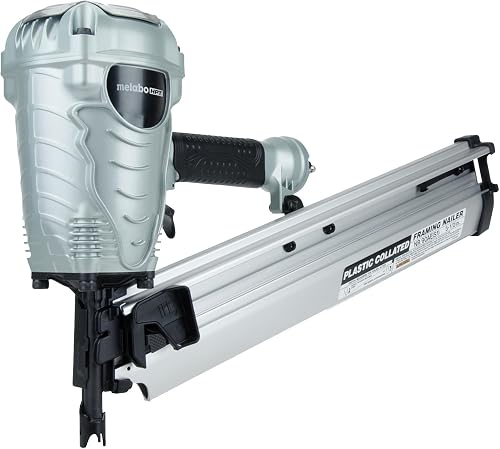 Best for mixed fence projects
Metabo HPT NR90AES1 21 Degree Framing Nailer
9.1/10 our score
See it on Amazon -
2
 Best for narrow fence corners
Metabo HPT NR90ADS1 30 Degree Framing Nailer
8.4/10 our score
See it on Amazon -
3
 Best for first fence builds
NuMax SFR2190 21 Degree Framing Nailer
8.0/10 our score
See it on Amazon
- 4
 Check it
NuMax SFR2190WN 21 Degree Framing Nailer
Best for workshop and fence work - 5
 Check it
3PLUS H2190SP 21 Degree Framing Nailer
Best for angled rail joints - 6
 Check it
DOTOOL 21 Degree Framing Nailer
Best for careful board placement - 7
 Check it
VEVOR 80-120 PSI Framing Nailer
Best for mixed fastener jobs - 8Check it
VEVOR 2-Inch to 3.5-Inch Framing Nailer
Best for fence and deck builds
How we chose the best nail guns for fencing
Fastener fit comes first, followed by tool weight, access around joints and control over nail placement. We compared those features alongside each model's stated applications.
A fencing application makes a tool relevant, but it doesn't make every compatible nail right for outdoor wood. General framing models can also suit a fence when their fasteners meet the plan.
All 8 picks use compressed air. Our guide to using a nail gun safely covers handling, while our framing nailer guide explains the tool category.
The scores reflect fastener compatibility, controls and practical fit for fence work.
| Product | Best for | Nail angle | Nail length | Weight | Our score |
|---|---|---|---|---|---|
| Metabo HPT NR90AES1 21 Degree Framing Nailer | mixed fence projects | 21 degrees, plastic collated | 2 to 3-1/2 in | 7.5 lb | 9.1 |
| Metabo HPT NR90ADS1 30 Degree Framing Nailer | narrow fence corners | 30 degrees, paper collated | 2 to 3-1/2 in | 7 lb | 8.4 |
| NuMax SFR2190 21 Degree Framing Nailer | first fence builds | 21 degrees, plastic collated | 2 to 3-1/2 in | 8.6 lb | 8.0 |
| NuMax SFR2190WN 21 Degree Framing Nailer | workshop and fence work | 21 degrees, plastic collated | 2 to 3-1/2 in | 7.3 | |
| 3PLUS H2190SP 21 Degree Framing Nailer | angled rail joints | 21 degrees, plastic collated | 2 to 3-1/2 in | 10.69 lb | 7.2 |
| DOTOOL 21 Degree Framing Nailer | careful board placement | 21 degrees, offset round head | 2 to 3-1/2 in | 8.9 lb | 7.1 |
| VEVOR 80-120 PSI Framing Nailer | mixed fastener jobs | 21 degrees, full round head | 6.8 | ||
| VEVOR 2-Inch to 3.5-Inch Framing Nailer | fence and deck builds | 21 degrees, full round head | 6.7 |
Which nail gun fits your fence project?
Choose the NR90AES1 for general fence and framing work, or the NR90ADS1 when access and lower weight matter most. The other picks serve more specific needs, including toe-nailing, sequential placement and mixed fastener jobs.
Metabo HPT NR90AES1 21 Degree Framing Nailer
- 21-degree plastic collated nails
- Accepts 2 to 3-1/2 in nails
- Sequential or contact firing
- Tool-less depth adjustment
A lighter option for compatible fence joints and other framing work. Its depth control helps you adjust nail seating as materials change.
Pros
- Tool-less depth adjustment
- Switchable firing modes
- Lighter than most picks here
Cons
- Requires a compressor and hose
- Cannot use 30-degree paper collated nails
The NR90AES1 suits buyers building a fence now who also want a tool for later framing projects. It accepts 21-degree plastic collated nails from 2 to 3-1/2 in, covering compatible joints rather than small finish work.
Its 7.5 lb weight makes it lighter than most picks here. That matters when you repeatedly lift the nailer to upper rails or hold it against a vertical fence section.
Selective actuation changes between sequential and contact nailing, and tool-less depth adjustment controls nail seating. Use sequential operation for deliberate placement, then check the depth again whenever board thickness or wood density changes.
Buy it if your required outdoor fasteners fit this nail system and you want one tool for several framing jobs. Skip it if your fence needs shorter nails, you already stock a different collation system, or a hose would make access difficult.
Metabo HPT NR90ADS1 30 Degree Framing Nailer
- 30-degree paper collated nails
- Accepts 2 to 3-1/2 in nails
- Sequential or contact firing
- 7 lb weight
The lightest pick here, with a magazine designed to help you reach tight corners. Choose it when your fence plan permits its supported nail head styles.
Pros
- Magazine designed for tight corners
- Lightest pick here
- Tool-less depth adjustment
Cons
- Cannot share 21-degree nail strips
- Head style must meet project requirements
The NR90ADS1 is the better choice when tight joint access drives the buying decision. Metabo HPT designs its 30-degree magazine to help in corners, which can matter near posts, gate framing and existing fence sections.
It uses paper collated clipped head and offset round head nails from 2 to 3-1/2 in. At 7 lb, it is the lightest model here, so it also deserves a look for repeated lifting.
Selective actuation and tool-less depth adjustment provide the main placement controls. The magazine angle helps with access, but it doesn't remove the need to plan where the nail will travel through the joint.
Choose this model when its supported head styles meet your fence requirements and you can source suitable outdoor nails. Skip it if you want to share 21-degree strips with another tool, or your plans require a head style this model doesn't accept.
NuMax SFR2190 21 Degree Framing Nailer
- Designed for wood fencing
- Accepts 2 to 3-1/2 in nails
- Sequential or bump firing
- Anti-dry-fire mechanism
A fence-focused option with depth adjustment, an anti-dry-fire mechanism and adjustable exhaust. It suits buyers who already have a compatible air setup.
Pros
- Designed for wood fencing
- Anti-dry-fire mechanism
- Adjustable exhaust
Cons
- Heavier than both Metabo HPT picks
- Requires a compressor and hose
The NuMax SFR2190 suits a first fence build with an existing air setup. Wood fencing is among its intended applications, and its controls cover depth adjustment, exhaust direction and firing mode.
It accepts 21-degree plastic collated full round head nails from 2 to 3-1/2 in, with diameters of 0.113 to 0.131 in. Check every part of that specification when ordering, especially if two nail boxes look alike.
The anti-dry-fire mechanism helps prevent empty firing. Its no-mar tip can help protect visible boards, although correct placement and depth still matter more than the tip alone.
At 8.6 lb, it carries a weight penalty compared with the Metabo HPT models. Choose it for compatible wood fence work where those controls meet your needs; skip it if reducing the load on your arm is the priority or your project needs a different fastener system.
NuMax SFR2190WN 21 Degree Framing Nailer
- Includes 500 3 in bright framing nails
- Designed for fencing and deck work
- Anti-dry-fire design
- Pull-back magazine pusher
Consider this package if you also have suitable work for its included bright nails. Buy separate outdoor fasteners when your fence materials require corrosion protection.
Pros
- Includes nails for suitable work
- Designed for fencing
- Tool-free depth adjustment
Cons
- Included bright nails are not a default outdoor choice
- Requires a compressor and hose
The SFR2190WN makes sense when you have both fence work and suitable workshop jobs. It includes 500 3 in bright framing nails, but that bundle should not decide which fasteners go into an outdoor fence.
Bright nails lack the corrosion protection normally needed for exposed fence work. Set them aside unless the intended application permits them, and choose outdoor fasteners compatible with your wood and any connecting hardware.
This model shares the SFR2190's nail length and diameter ranges. It also has an anti-dry-fire design, tool-free depth control and a pull-back magazine pusher for loading.
Choose the package if the tool fits your project and you have a genuine use for the included nails. Skip it if you're buying only for an exposed fence and the bundle's main appeal is avoiding a separate nail order, because the right outdoor fasteners still come first.
3PLUS H2190SP 21 Degree Framing Nailer
- Accepts 2 to 3-1/2 in nails
- Full round head plastic collated nails
- Hardened claw tip
- Sequential or bump firing
3PLUS says the hardened claw tip reduces slipping during toe-nailing. That feature suits planned angled joints, but its weight makes lighter alternatives worth considering.
Pros
- Claw tip for toe-nailing
- Tool-free depth adjustment
- Dry-fire lockout
Cons
- Heaviest pick here
- Angled placement still requires careful nail-path planning
The 3PLUS H2190SP is worth considering for planned toe-nailed joints, where a nail enters at an angle. 3PLUS says its hardened claw tip helps reduce slipping during that work.
It uses 21-degree full round head plastic collated nails from 2 to 3-1/2 in. The tool also has a no-mar tip, dry-fire lockout, adjustable exhaust and a switch for sequential or bump firing.
The trade-off is 10.69 lb, the highest weight in this group. A nose feature that helps at a few joints may not justify carrying that extra weight along an entire fence.
Choose it when your fence design calls for angled nailing and the claw tip addresses that need. Skip it for repeated high placement if a lighter tool meets the plan, and never use toe-nailing as a substitute for a required bracket, screw or other specified connection.
DOTOOL 21 Degree Framing Nailer
- Designed for wood fencing
- Sequential trigger mode
- Tool-free jam release
- 60-nail magazine
A sequential-firing option for placing one fastener at a time. Its open nose and tool-free jam release provide access when a nail needs clearing.
Pros
- Sequential nail placement
- Tool-free depth adjustment
- Tool-free jam release
Cons
- Heavier than both Metabo HPT picks
- Requires compatible offset round head nails
The DOTOOL suits buyers who want one-at-a-time placement and accessible jam clearing. Its sequential trigger fits a deliberate routine: position the board, align the nose and drive the fastener.
It accepts 21-degree offset round head nails from 2 to 3-1/2 in, with diameters of 0.113 to 0.130 in. Wood fencing is among its intended uses.
The open nose and tool-free jam release help you reach a stuck fastener. Disconnect the air and follow the manual before clearing it; easy access doesn't make a connected nailer safe to work on.
At 8.9 lb, it is heavier than the two Metabo HPT picks. Choose it if its fastener system and jam access suit your routine, but skip it if you want confirmed contact firing or need a lighter tool for frequent lifting along a long fence run.
VEVOR 80-120 PSI Framing Nailer
- Accepts smooth, ring and threaded nails
- 80 to 120 PSI operating range
- 60-nail magazine
- Sequential or contact firing
An option for projects calling for different nail shanks. Check the separate length and diameter limits for each type before ordering fasteners.
Pros
- Three nail shank types supported
- Open nose for jam removal
- Tool-less depth adjustment
Cons
- Ring and threaded nails limited to 3 in
- Requires a compatible air setup
This VEVOR model suits buyers whose projects call for different nail shank types. It accepts 21-degree full round head smooth, ring and threaded nails, but each type has its own size limits.
Smooth shank nails can be 2 to 3.5 in long and 0.113 to 0.130 in in diameter. Ring and threaded nails must be 2 to 3 in long and 0.113 to 0.120 in in diameter.
It operates at 80 to 120 PSI and has a 60-nail magazine, dual firing modes, depth adjustment and an open nose for jam access. Its weight is 9 lb.
Choose it when those exact fastener limits cover your fence and other planned work. Skip it if your design calls for ring or threaded nails longer than its limit, and don't assume a nail fits just because the box has the right angle.
VEVOR 2-Inch to 3.5-Inch Framing Nailer
- Accepts smooth, ring and threaded nails
- 80 to 120 PSI operating range
- 60-nail magazine
- Sequential or contact firing
A framing and fence option with the same fastener ranges as the other VEVOR pick. Choose between them by tool size and weight rather than expecting a broader nail range.
Pros
- Designed for fence construction
- Open nose for jam removal
- Tool-less depth adjustment
Cons
- Ring and threaded nails limited to 3 in
- Heavier than the other VEVOR pick
The second VEVOR fits fence and deck projects using the same nail system. It shares the preceding model's fastener ranges, pressure range, magazine capacity and main controls, so it doesn't expand your nail choices.
The practical difference here is the body. This model measures 21.06 x 13.98 x 4.33 in and weighs 9.3 lb, compared with 19.29 x 14.96 x 4.92 in for the other VEVOR.
Those measurements can matter around posts or when storing the tool, but no single dimension proves that one will reach every joint more easily. Consider the space needed for the magazine and hose as well as the nose.
Choose it when its shape suits your workspace and the shared fastener limits cover the job. Skip it if you expect a broader nail range than the other VEVOR or want the lighter option of the pair.
What should you check before buying a fencing nailer?
Match the joint, outdoor fastener and air setup before comparing convenience features. A tool can drive a nail cleanly while still using the wrong fastener for the fence.
How do you choose the best nail gun for fencing joints?
Separate picket attachment from rail connections and decorative work. Each joint has different demands, so one nailer may handle only part of the build.
For pickets, consider board thickness, rail thickness and the required holding strength. For rail-to-post joints, follow the fence design rather than assuming face nailing or toe-nailing is enough.
Thin caps and trim may need another tool or fastening method. Our guide to choosing a nailer gauge explains why larger framing fasteners aren't a substitute for every smaller nail.
Which nails should you use outdoors?
Choose corrosion-resistant fasteners compatible with the wood and hardware. Bright framing nails are not the default choice for a fence exposed to rain and damp wood.
Pressure-treated lumber can require specific coatings or stainless steel fasteners. Cedar and other woods can also have fastener recommendations intended to limit corrosion and staining.
Follow the lumber, fastener and hardware manufacturers' guidance together. Matching the nailer's angle says nothing about whether a nail's finish suits the fence.
Ring shanks can provide more resistance to withdrawal than smooth shanks, but they still need the right length, diameter and finish. Don't select a shank type independently of the fence plan.
What nail length should you use for fence boards?
Choose length from board thickness and required penetration into sound support. Avoid a blanket rule that uses the same nail for every board and joint.
Measure the actual materials rather than relying only on nominal lumber sizes. Check that the chosen nail won't leave a sharp point exposed on the other side.
A longer nail isn't automatically better. It can split wood, emerge from a rail or reach hidden hardware, while a short nail may leave too little grip in the support.
If the required fastener falls outside the tool's range, change the tool or fastening method. Don't change the joint design just to use nails already on hand.
Does the magazine angle change how a fence holds?
Magazine angle mainly affects tool access and nail compatibility, not the strength of the completed fence by itself. The joint, fastener dimensions, head, shank and wood condition determine the connection.
Check local requirements and your plans for acceptable nail head styles. Paper and plastic collated strips are different systems, so buying the wrong strip can leave you unable to use an otherwise suitable nail.
Is pneumatic power practical along your fence line?
Pneumatic power suits jobs where you can route a hose safely and supply enough air. Every pick here requires that setup, so include it in the buying decision.
Check the manual's air delivery requirements against the compressor's output at operating pressure. Tank size alone doesn't tell you whether the compressor can keep up with repeated firing.
A remote repair may favor a different setup than a full build near power. Our cordless versus pneumatic nailer comparison helps weigh that trade-off.
How should you set up a nail gun for fence work?
Start with secure boards, the correct nails and a depth check on matching scraps. Set up before moving along the fence so you aren't solving tool problems while holding loose lumber.
- Inspect the work area. Check both sides of the fence, remove obstacles and look for old nails or hidden hardware near each fastening point.
- Support and clamp the boards. Use spacers or a guide to hold the layout rather than keeping your free hand near the nail path.
- Prepare the air system. Inspect the hose and fittings, then connect and load the tool in the order its manual requires.
- Select sequential operation. Confirm the correct trigger sequence and check that safety controls work as the manual describes.
- Set pressure and depth. Stay within the tool's pressure range and use matching offcuts to establish suitable nail seating.
- Check the first installed board. Inspect the face, back and connection before repeating the setup along the fence.
Aim for the head position required by the fence design. Excessive depth can crush the board face and reduce the wood held beneath the nail head.
If nails stand proud, check air supply, depth setting, fastener compatibility and wood condition before raising pressure. A knot or dense patch can change driving behavior even within one board.
Use full sequential firing for controlled placement. Contact or bump firing carries a greater risk of unintended discharge, especially when moving, reaching or repositioning boards.
Wear eye and hearing protection, keep others clear and keep your finger off the trigger between shots. The NIOSH nail gun safety guide explains trigger risks and safer work practices.
Our nail gun safety guide covers handling steps. The complete nail gun guide explains tool types and common project uses.
What keeps a fencing nailer working between jobs?
Keep debris out, fasteners dry and maintenance matched to the manual. Outdoor fence work exposes the tool to soil, sawdust and moisture that shouldn't go into its magazine or air connection.
Disconnect the air and unload as directed before inspecting or cleaning. Clear loose collation pieces and debris using the maker's approved method, without forcing parts or altering the safety mechanism.
Use pneumatic tool oil only if the manual calls for it, and follow its amount and schedule. Don't assume every air nailer has the same lubrication needs.
Inspect the hose for damage and check connections for leaks. Drain the compressor according to its instructions, since moisture in the air system can contribute to corrosion.
Store nail strips away from damp ground and rain. Damaged collation or corroded nails can create feeding problems even when the tool itself is clean.
Stop if the nailer leaks, misfires or behaves differently. Disconnect it and find the cause before continuing, rather than compensating with more pressure or repeated trigger pulls.
Which mistakes cause the most trouble on a fence?
The main mistakes are wrong fasteners, poor support and rushed placement. Preventing them usually helps more than choosing a nailer with another firing mode.
Buying nails by length alone: Angle, collation, diameter and head style must also fit. Outdoor finish and shank type then need to match the fence materials and connection.
Driving too close to an edge: A large fastener near an edge or board end can split the wood. Follow the required spacing, and use a suitable alternative fastening method where the joint needs it.
Holding a loose picket while firing: A slipping board can move your hand toward the nose. Clamp it and keep hands clear of the possible nail exit path.
Using the nailer to pull boards together: Seat and secure the joint before fastening. A nail driven across a gap doesn't replace a properly fitted connection.
Ignoring changes in wood: Wet, dry, knotty and dense sections can respond differently. Recheck nail seating instead of copying one depth setting across the whole job.
Treating a gate like a fixed panel: Gates move and place different loads on their joints. Follow the gate design and hardware instructions rather than copying the picket fastening pattern.
Covering up a bad shot: Stop for protruding points, split boards or bent fasteners. Make the area safe and correct the connection before adding more nails nearby.
Which nail gun should you choose for fencing?
The best nail gun for fencing is the one that accepts the required outdoor fastener and reaches the joint safely. Make those two checks before choosing among these models.
Pick the NR90AES1 for compatible fence work plus future framing projects. Choose the NR90ADS1 when lighter weight and corner access matter, provided its nail head styles meet your plans.
The NuMax SFR2190 suits a first fence build with a compatible compressor already available. Choose the SFR2190WN package only if you also have suitable work for its included bright nails.
Consider 3PLUS for planned angled joints, DOTOOL for deliberate sequential placement, or either VEVOR when its stated shank ranges cover the job. If your boards need shorter fasteners than these tools accept, use a different tool.
Before fastening the first board, use our nail gun setup and handling guide to review the next steps.
Our top 3 picks at a glance
-
1
Best for mixed fence projects
Metabo HPT NR90AES1 21 Degree Framing Nailer
9.1/10 our score
See it on Amazon -
2
Best for narrow fence corners
Metabo HPT NR90ADS1 30 Degree Framing Nailer
8.4/10 our score
See it on Amazon -
3
Best for first fence builds
NuMax SFR2190 21 Degree Framing Nailer
8.0/10 our score
See it on Amazon
Frequently asked questions
What type of nail gun is best for fencing?
A framing nailer suits wood fence joints that require its supported nails, but it isn't right for every fence board. Start with the fence plan, board and rail thickness, and outdoor fastener requirements, then choose a tool that accepts the required length, diameter, head style and collation.
Are 21-degree and 30-degree framing nailers interchangeable?
No, their nail strips are not interchangeable because the magazine angle, collation, nail head and fastener dimensions must all match the tool. The NR90ADS1 uses paper collated nails, while several other picks use plastic collation, so choose a nail system you can keep stocked in the finish your fence needs.
Should I use bump or sequential firing for a fence?
Choose full sequential firing for controlled placement, following the tool manual's trigger sequence, because contact or bump firing carries a greater risk of unintended discharge. Clamp boards before fastening, keep hands away from the nail path, and keep your finger off the trigger while moving between fastening points.
Can I use a framing nailer with any fence board?
No, thin boards and small trim may not suit a framing nailer's fasteners because a nail can fit the tool yet split the board or protrude through the rail. Match the fastener to the joint and fence design, and use another fastening method when the required nail falls outside the tool's range.


